

To plan a product launch event in Germany, start with your audience and the one message the launch must land, then choose a city and a venue whose technical set-up fits the show you want to stage. Secure the venue and your production partners early, check the trade-fair and holiday calendar before you fix a date, and work with a local partner who can handle suppliers, permits and guest logistics on the ground. This guide walks international marketing and event teams through each of those decisions.
Why Launch a Product in Germany?
Germany is one of Europe’s largest markets, and it is easy to reach. Frankfurt has the country’s largest airport, and both Frankfurt and Munich are major European hubs, so journalists, distributors, dealers and key customers can fly in from across Europe and from North America for a single day or a short programme.
Many industries also meet in Germany anyway. If your sector already gathers at a German trade fair, a launch event in the same city can reach an audience that is in town – consumer electronics brands, for example, look at IFA Berlin, which takes place from 3 to 7 September 2027. If your guests are not tied to a fair, you will usually get better venue and hotel availability by avoiding the big fair weeks.
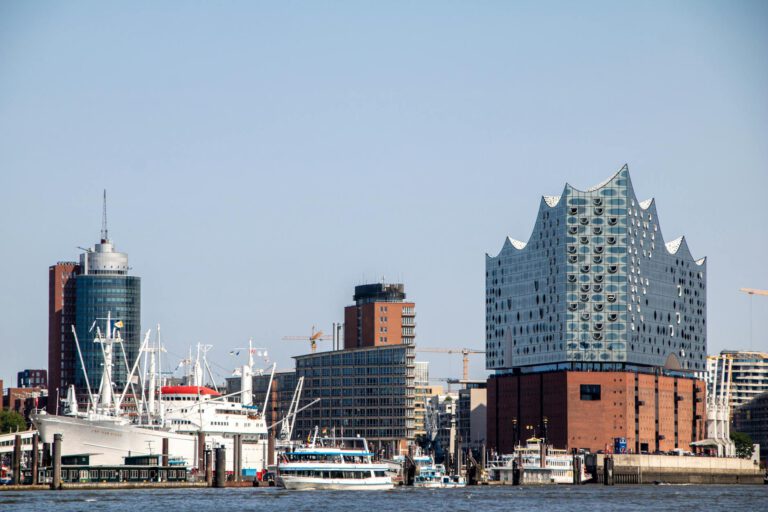
Choosing the City: Berlin, Munich or Frankfurt
- Berlin – the choice for creative, culture-led launches. Converted industrial and cultural spaces such as Radialsystem, Funkhaus and the Kulturbrauerei give a strong backdrop, while CityCube and the Estrel handle large audiences. See our DMC Berlin page and our guide to tech events in Germany for launches aimed at the tech community.
- Munich – strong for premium and engineering-led brands. BMW Welt is an established setting for launches and receptions, and the ICM at Messe München suits large formats. If you are revealing a vehicle, our page on automotive events and car launches covers test drives and vehicle logistics. More on the city: DMC Munich.
- Frankfurt – ideal when most guests fly in. The Alte Oper offers a formal, prestigious stage, and Kap Europa at Messe Frankfurt is a modern congress venue. See DMC Frankfurt.
Hamburg (Congress Center Hamburg) and the Ruhr area (Zeche Zollverein in Essen) are further options. Our guide to choosing a conference venue in Germany compares venue types city by city.
Venue Types and What “Full Production Support” Really Means
When planners ask which German venues offer full event production support for a product launch, the honest answer is that it depends on the venue type. There are three broad categories, and each splits the work between the venue and your production team differently.
Congress and trade-fair centres
Venues such as the ICM in Munich, Kap Europa in Frankfurt, CCH in Hamburg or CityCube in Berlin are built for large events. They usually work with in-house or appointed technical partners and have the infrastructure – power, rigging, loading access, staff – that big productions need. The trade-off is that the rooms are neutral, so the creative concept has to create the atmosphere.
Industrial and creative spaces
Former factories, power stations and studios – Radialsystem or Funkhaus in Berlin, Zeche Zollverein in the Ruhr – give a launch character that a ballroom cannot. They are often closer to a blank canvas: staging, lighting, sound and sometimes additional power are brought in by your production company. That means more design freedom, but also longer build-up and dismantling times to plan and budget for.
Brand worlds, museums and landmark venues
Landmarks such as BMW Welt in Munich, the Alte Oper in Frankfurt or the Humboldt Forum in Berlin lend the launch their reputation. In return they tend to set clearer rules: fixed build-up windows, approved suppliers for catering or technology, and limits on what can be installed.
Questions to ask every venue
- Which technical equipment is in-house, and which suppliers are exclusive or mandatory?
- What are the rigging points, load limits and available power for staging and screens?
- How long are the build-up and dismantling windows, and is overnight access possible?
- Can the room be fully blacked out, and is there enough bandwidth for a livestream?
- Are there noise limits or curfews, especially for outdoor elements?
- Which seating and stage layouts are already approved, and what would need fresh approval?
Timing Your Launch
Fix the date only after checking three calendars. First, trade fairs: during major fairs, hotel availability in the host city can be tight and rates higher. Second, public holidays: some are national (Christmas Day and 26 December, for example), but others apply only in certain states, and school holidays are staggered by state. Third, your own market calendar – press cycles, retail seasons and the timing of competitors’ announcements. Our month-by-month guide to the best time for corporate events in Germany covers fairs and holidays in more detail.
Lead time depends on scale. For venues in major cities, we generally recommend booking 6–12 months ahead; launches with custom staging or a landmark venue benefit from starting as early as possible, because the venue and date determine almost every later decision.
Permits, Rules and Practicalities
- Assembly-venue rules: rooms for more than 200 people fall under the building regulations for assembly venues in each German state (Versammlungsstättenverordnung). They govern escape routes, fire safety and seating, so staging and seating changes should be agreed with the venue early.
- Music licensing: public use of music in Germany is licensed through GEMA, the German music rights organisation. Clarify whether the venue, the production company or you as organiser registers the event.
- Confidentiality: for products under embargo, agree non-disclosure terms with suppliers, control access during build-up and plan when the product arrives on site.
- International guests: US citizens can visit the Schengen area for tourism or business without a visa for up to 90 days in any 180-day period. Since April 2026 the EU’s Entry/Exit System registers non-EU visitors’ fingerprints and a facial image at the border, so allow time on arrival and brief your guests in advance.
A Typical Planning Sequence
- Brief: audience, objectives, the reveal moment, success measures and budget range.
- City and venue: shortlist, availability check and site inspection.
- Creative and production design: stage, content, show flow and technical plan.
- Contracting: venue, AV and production, catering, staff, hotels and transfers.
- Guest management: invitations, registration, travel and press accreditation.
- Rehearsal and show day: technical rehearsal, run sheet and on-site coordination.
- Follow-up: content, press and lead handover to sales.
What Does a Product Launch in Germany Cost?
There is no standard price, because the main cost drivers vary so much: the venue type and the number of build-up days, the scale of staging and technology, guest numbers and their travel, catering, and the date – trade-fair weeks push up hotel costs. Ask for a proposal based on your brief rather than a per-head figure. For typical budget ranges, see our DMC cost and pricing guide and our overview of corporate event costs in Germany.
How a DMC Helps
CTI is a destination management company (DMC) with offices in Munich, Berlin and Frankfurt. For a product launch we source and manage the venue, bring in and coordinate production partners for staging, lighting and AV, organise catering, guest management, transfers and hotels, coordinate the permits the programme needs, and run the event on site. Many launches end with a dinner for guests and press – our guide to gala dinner venues in Germany helps with that part. More on our services: special and corporate events in Germany.
Frequently Asked Questions
Which German venues offer full event production support for product launches?
Large congress and trade-fair venues – for example the ICM in Munich, Kap Europa in Frankfurt, CCH in Hamburg and CityCube in Berlin – are built for big productions and usually work with in-house or appointed technical partners. Creative and industrial spaces such as Radialsystem or Funkhaus in Berlin offer more character but need production brought in. In both cases a production partner or DMC coordinates the technical side for you.
How far ahead should we plan a product launch in Germany?
As early as you can. For venues in major cities we generally recommend booking 6–12 months ahead, and launches that depend on a landmark venue or custom staging benefit from starting even earlier. Check the trade-fair and holiday calendar before you commit to a date.
Can a DMC organise a product launch in Germany?
Yes. A DMC such as CTI, with offices in Munich, Berlin and Frankfurt, handles the venue, production partners, catering, guest logistics, permits and on-site coordination, so your team can focus on the product and the message.
How much does a product launch event in Germany cost?
It depends mainly on the venue type, the scale of production, guest numbers and travel, and the date. The most reliable way to get a figure is a proposal based on your brief; our DMC cost and pricing guide explains how budgets are built.
Do we need permits for a launch event in Germany?
Usually the venue holds the operating approvals, but rooms for more than 200 people are subject to the state assembly-venue regulations, so changes to staging or seating may need to be agreed. Music played in public is licensed through GEMA, and outdoor elements or vehicles on public roads can require additional permits – your DMC or production partner coordinates this.
Planning a Launch in Germany?
Tell us about your product, your audience and your preferred dates, and our team will get back to you with ideas for the city, venue and format. Contact CTI.